The contingent workforce is becoming a strategic advantage
For enterprise organizations operating at scale, the contingent workforce has evolved from a flexible resource into a strategic lever - and with the right management, a genuine competitive advantage.
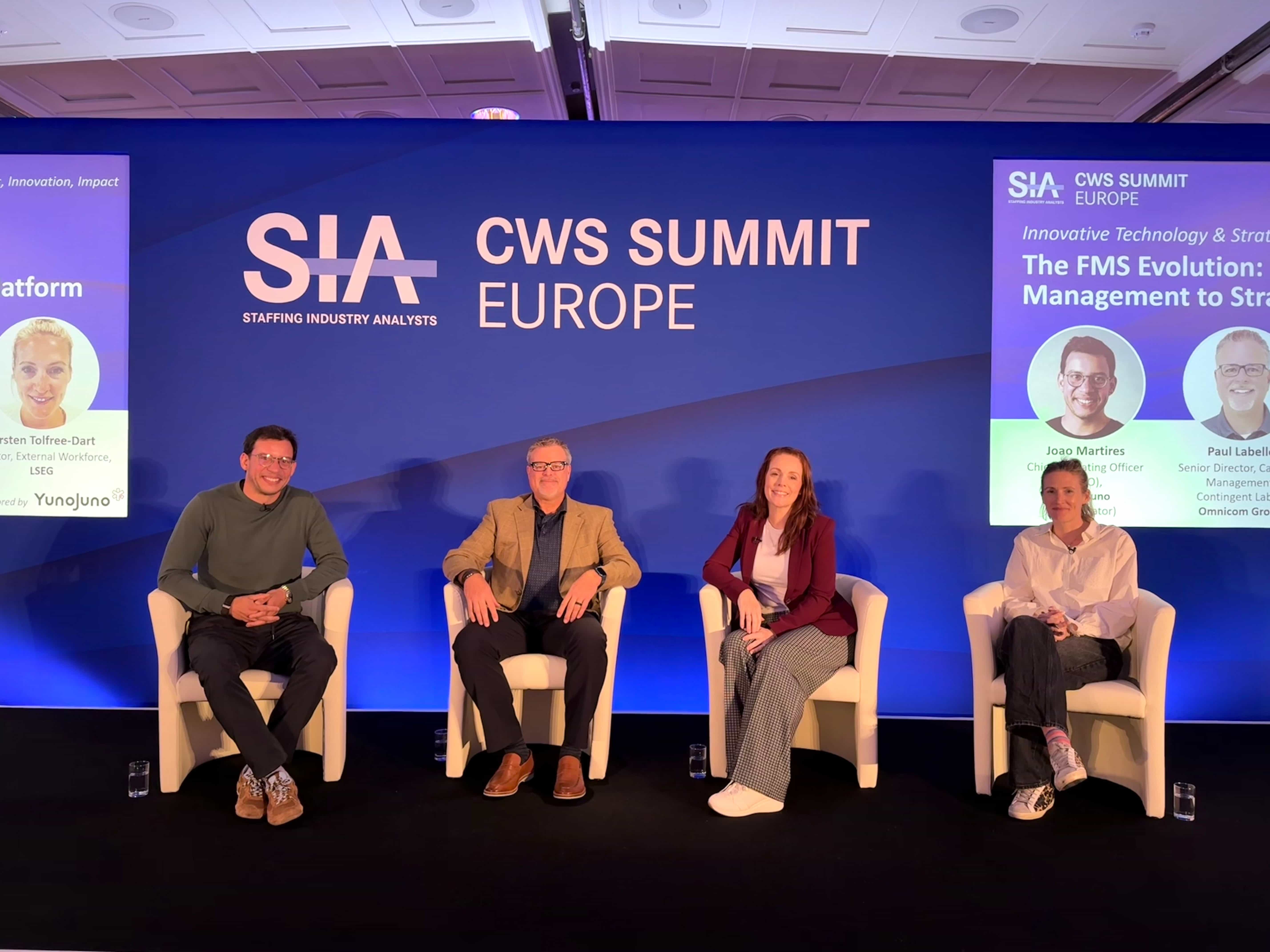
That was the central theme at SIA CWS Summit Europe 2026, where YunoJuno hosted a panel session titled The FMS Evolution: From Vendor Management to Strategic Workforce Platform.
Moderated by Joao Martires, Chief Operating Officer at YunoJuno, the session brought together:
- Paul Labelle, Director of Category Management for Contingent Labor at Omnicom
- Caitlin McFeron, Workforce Solutions Technology Analyst at SIA
- Kirsten Tolfree-Dart, Director of External Workforce at LSEG
The discussion focused on the operational realities of managing contingent workforces across the globe: what is working, where organizations are struggling, and what comes next.
FMS is the front of workforce strategy conversation
For years, Freelancer Management Systems (FMSs) sat within isolated procurement or HR workflows, used by only a small number of stakeholders inside the business.
A unanimous perspective from all senior workforce leaders on the panel, was that this has fundamentally changed.
FMS has moved from a siloed tool to embedded in the wider CW technology ecosystem, now firmly part of broader external talent strategy.
For the organisations on stage, moving to an FMS was a critical operational shift toward total global governance, visibility, and scalability.
The forces reshaping contingent workforce management
Joao Martires framed the discussion around several major shifts currently reshaping the workforce landscape:
- Growing demand for specialist flexible talent
- AI and automation
- Economic pressure and cost scrutiny
- Maturing workforce technology
- Changing workforce expectations
Panelists discussed the changing talent market, particularly among younger professionals who increasingly prioritize flexibility, autonomy, and portfolio careers over traditional permanent employment.
From an organizational viewpoint, panelists were in agreement on the need for systems that are capable of engaging independent professionals quickly, compliantly, and at scale, while supporting how modern contractors operate as businesses themselves.
Retain and redeploy: the hidden workforce
One of the strongest themes of the session was the importance of retaining and redeploying previously engaged contractor talent.
Rather than sourcing new talent for every requirement, leading organizations are increasingly looking first at their existing network of known, vetted contractors.
The challenge historically has not been willingness. It has been infrastructure.
Without a centralized system of record, contractor talent often sits inside disconnected departments or individual hiring manager relationships.
The challenge here has always been visibility. A well-governed FMS now makes redeployment operationally possible.
Panelists reinforced that this approach is gaining momentum across the market as organizations recognize the hidden costs of repeatedly sourcing and onboarding entirely new talent.
AI in CWM: where organizations really are
AI was inevitably a major topic throughout the session, but the conversation remained grounded in operational reality rather than hype.
Organisations are at different points on this journey. Some remain cautious about broad implementation, while others are embedding AI across their workforce programmes at pace, expediting decision processes and capability.
The natural starting point for many however, before full AI integration - is with automation, finding meaningful value through streamlining sourcing, onboarding, and compliance workflows while keeping human oversight in place.
One of the panel's strongest insights was a reframing of data governance. Because AI depends on clean, structured data, readiness isn't primarily a technology or training challenge - it's a data challenge, and organisations must tackle it before implementation can meaningfully begin.
Visibility and order are a business imperative
One of the clearest themes from the panel was a desire - from operations and leadership alike - to bring structure to the whole external workforce. For many organisations, independent contractors and freelancers have historically lived in spreadsheets, inboxes, or institutional memory, with little visibility across the organization.
FMS has created the opportunity to bring genuine order to that complexity, giving businesses the visibility and control they need to manage this workforce with confidence.
Closing thoughts
The session closed with a clear message: organizations succeeding in contingent workforce management are not waiting for perfect conditions or fully mature AI strategies.
They are building the right foundations first:
- Governance
- Visibility
- Structured data
- Integration
- Operational consistency
The technology supporting contingent workforce programs has matured significantly. The challenge now is organizational alignment and execution.
Joao Martires closed the session with a reflection that captured the broader mood of the conversation.
“Every wave of technology is accelerating. The organizations investing now in the right systems, data, and partnerships will define what contingent workforce management looks like over the next decade.”
How YunoJuno can help
YunoJuno is the leading Freelancer Management System for enterprise organizations globally. We help HR, procurement, and finance teams source, onboard, manage, and pay contractors and independent talent across 165+ countries with the compliance, visibility, and control complex programs required.
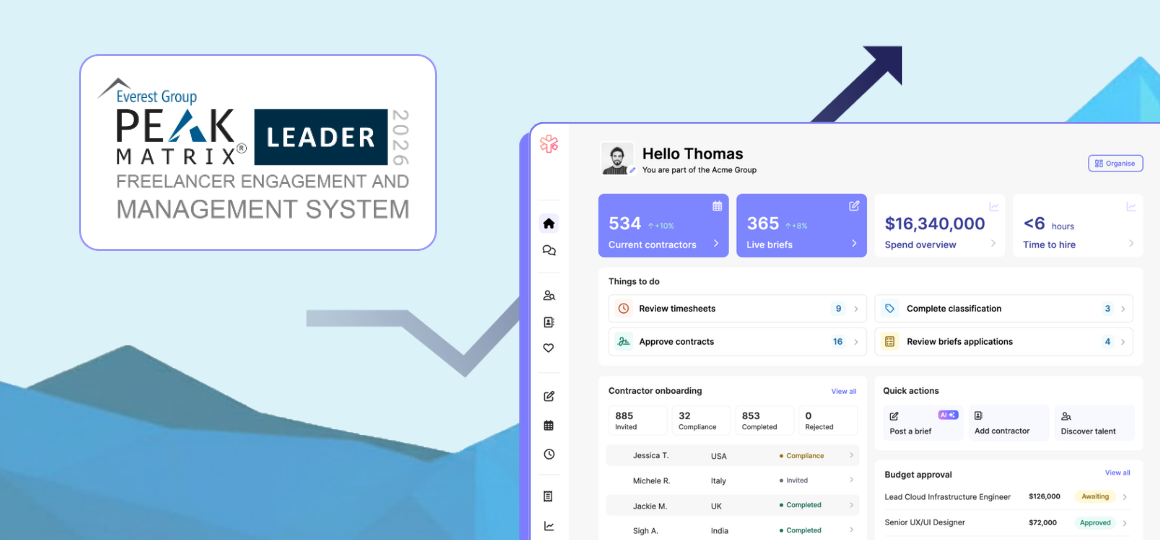
Named the highest-designated Leader in the Everest Group FEMS PEAK Matrix 2026, YunoJuno is built to support the challenges discussed throughout the panel, including:
- Global contractor compliance
- Workforce visibility
- Talent pools
- AI-ready workforce data
- Ecosystem integration
If you are looking to build a more scalable and compliant contractor program, book a call with our team to learn more.